Punjabi Savories Explained for Tea and Celebrations

Short answer: Punjabi savories are salty, spiced, tangy, or savoury foods served as snacks, starters, tea-time bites, or part of a celebration spread. The category can include hot filled pastries, fritters, crisp dry snacks, patties, chaat-style dishes, and tandoor-cooked starters. The right choice depends on when the food will be eaten, how far it must travel, the textures your guests enjoy, the rest of the menu, and any ingredient or allergen needs. Ask the shop what is available that day instead of assuming every common Punjabi snack is on its menu.
Choose savouries in four steps
- Decide whether the food will be eaten immediately, transported, or served later.
- Build texture variety with something crisp, something soft or filled, and a fresh or sauced option only when practical.
- Match spice, portion style, and dietary needs to the actual guests.
- Confirm the current menu, ingredients, allergens, preparation, pickup time, storage, and reheating instructions with the shop.
What does savoury mean?
“Savoury” describes food whose main character is salty, spiced, tangy, aromatic, or rich rather than sweet. That does not mean every savoury is very hot. A snack can be mild but fragrant with cumin, ajwain, coriander, ginger, or toasted flour. Another can be sharply tangy from chutney or chaat seasoning. Texture matters as much as heat.
The broader Indian savoury category is large. A Food Industry Capacity & Skill Initiative overview uses examples such as samosas, pakoras, mathri, roasted chana, and namkeen mixtures. Those examples help explain the category; they do not prove that a particular shop sells every item. Punjabi snack collections also include tandoor-cooked starters, patties, and tea-time foods, as shown in this Punjabi snack reference.
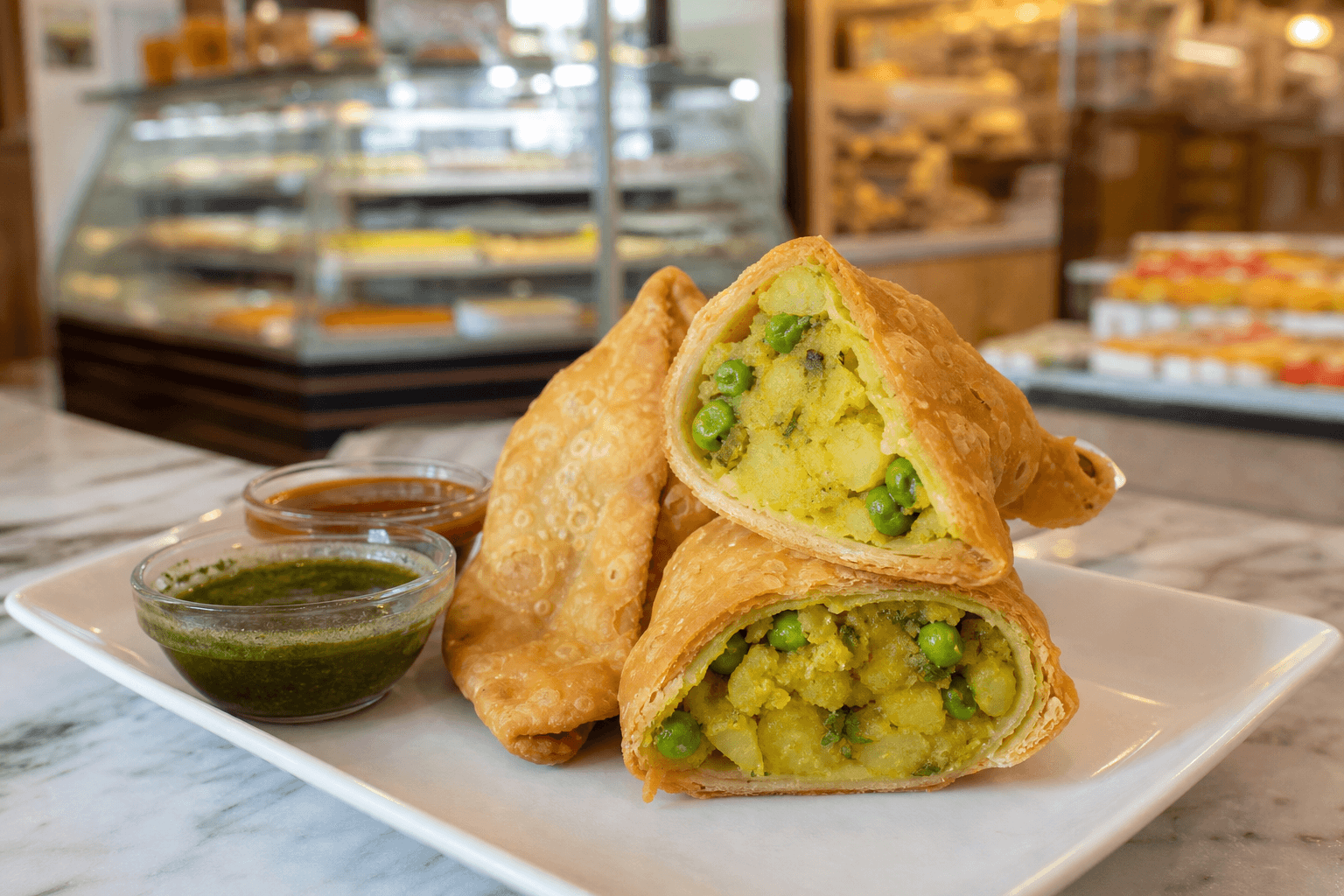
Super Punjab Sweet House describes itself as a vegetarian Punjabi sweets and savories shop in Abbotsford. Its homepage specifically names crispy samosas and says batches are prepared fresh daily. This guide uses the business’s confirmed samosa example, but treats every other snack as a category example until the current menu or staff confirms availability.
Common Punjabi savoury categories
| Category | Typical experience | Best fit | Question before ordering |
|---|---|---|---|
| Filled pastries such as Punjabi samosas | Crisp shell with a soft, seasoned filling | Tea, office sharing, casual gatherings, and appetizer trays | What filling, size, spice level, chutney, and pickup timing are available? |
| Pakora or bhaji-style fritters | Irregular crisp coating around vegetables, paneer, or another filling | Eating soon after pickup and serving with chutney | Which varieties are available, and how should they be kept and reheated? |
| Tikki and patty-style snacks | Crumbly or creamy centre with a browned exterior | Plated starters, chaat, or a more substantial tea-time bite | Is it served plain, with chutney, or as a sauced dish? |
| Dry crisp snacks such as mathri or namak para | Crunchy, portable, and usually less dependent on immediate service | Tea trays, travel, gift boxes, and longer open-house events | How is it packaged, and what storage guidance applies? |
| Namkeen and mixtures | Small crisp components with salt, spice, nuts, lentils, or sev depending on the recipe | Bowls for casual snacking or adding crunch to a mixed spread | What ingredients and allergens are in this exact mixture? |
| Chaat-style snacks | Layered crisp, soft, tangy, fresh, and sauced textures | Serving immediately as an interactive starter | Can components be packed separately to protect texture? |
| Tandoor-cooked starters | Roasted or charred edges with a marinated centre | Dinner starters and more substantial celebration menus | What is vegetarian, what accompaniments are included, and how should it be reheated? |
Not every category is uniquely Punjabi, and recipes vary by family, region, and shop. The useful buyer question is not “Which list is official?” It is “Which texture, flavour, serving style, and ingredient profile works for this occasion?”
Match the savoury to the occasion
Tea for a small group
Choose one hot item and one dry crisp item if available. The hot item gives the table a fresh centre, while the dry item keeps its texture as conversation continues. A sweet can be added separately, but avoid selecting so many rich items that guests cannot distinguish them.
A family celebration
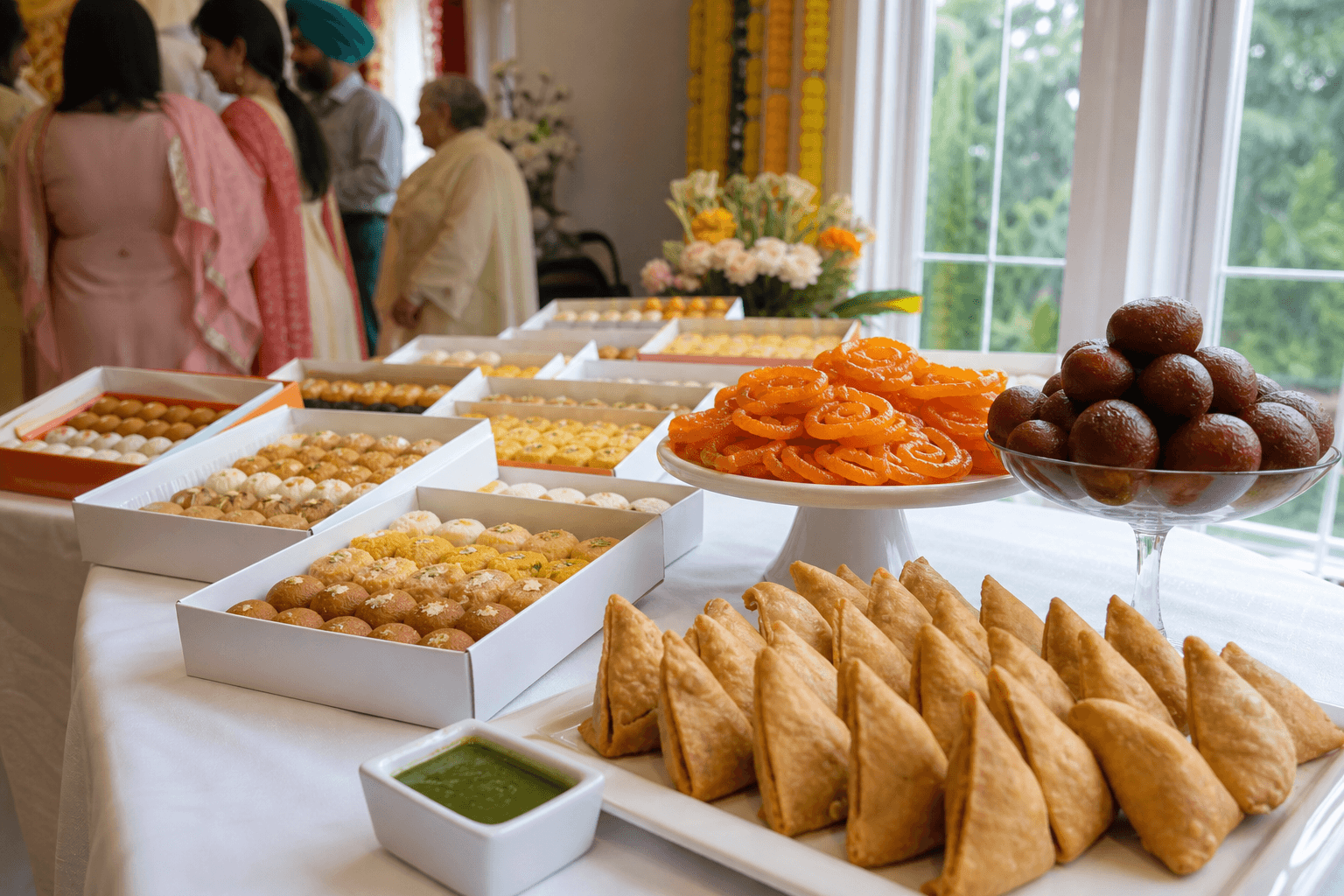
Use familiar hand-held food first, then add one item that brings contrast. If samosas are the anchor, pair them with a different texture rather than several pastries with similar fillings. Ask whether chutneys are included and whether serving utensils, plates, or labels are needed.
An office or community tray
Prioritize clean portioning, clear ingredient answers, and predictable pickup. Sauced chaat may be excellent when assembled at service, but less suitable when it must sit. Individually handled pieces can be easier for a meeting, while dry mixtures need scoops or small bowls.
A gift or take-home box
Dry, crisp foods generally travel differently from hot fried snacks or fresh chaat. Ask the shop what it recommends for the travel time and when the recipient will eat it. Keep sweets and savouries separated when aroma, moisture, syrup, or crumbs could affect the other items.
Build a better assortment with texture
A useful assortment does not need the longest possible list. It needs contrast. Think in four texture roles:
- Crisp shell: a filled pastry or fritter that is satisfying at the first bite.
- Dry crunch: a mathri, namak para, or mixture-style item that can sit on a tea tray more easily.
- Soft centre: a tikki, paneer starter, or stuffed item that balances dry crunch.
- Fresh or sauced contrast: chutney or a chaat component added near service so crisp food does not become soggy too early.
Choose two or three roles rather than buying five versions of the same experience. Texture variety also lets guests take a smaller taste before choosing a favourite.
Plan flavour and spice without guessing
“Punjabi” does not establish one heat level. Spice can refer to aromatic seasoning as well as chilli heat. Ask how the shop describes the exact item and whether chutney carries more heat than the snack itself. For a mixed group, it can be easier to choose a broadly approachable base and offer stronger chutney separately, if the shop supports that setup.
Do not label an item mild, child-friendly, or allergy-safe based only on appearance. Recipes, fillings, frying oil, garnishes, and chutneys can change the answer. Let each guest decide with accurate information.
Ask precise dietary and allergen questions
Super Punjab Sweet House currently describes its offering as 100% vegetarian. Vegetarian does not automatically mean vegan, dairy-free, gluten-free, nut-free, sesame-free, onion-free, garlic-free, or suitable for a specific allergy. A savoury recipe may involve wheat, dairy, chickpea flour, nuts, seeds, legumes, shared equipment, or a chutney with its own ingredients.
Use exact questions:
- What are the ingredients in this item, filling, coating, garnish, and chutney?
- Does it contain dairy, wheat, nuts, sesame, soy, or another allergen relevant to the guest?
- Is it prepared or fried on shared equipment or in shared oil?
- Can the shop meet the guest’s specific requirement, and how does it prevent cross-contact?
If the need is medically important, the person eating the food should review the shop’s answer. This guide cannot verify the current kitchen process.
Estimate quantity from the whole menu
There is no reliable universal piece count for every guest. A small samosa, large samosa, dry snack, plated tikki, and chaat serving are not equivalent. Appetite also changes with the time of day, age mix, event length, and whether a meal and sweets follow.
Build the estimate in this order:
- Confirm the number of adults and children who will eat the savouries.
- Decide whether savouries are a welcome snack, a starter, or the main food.
- List the other food that will be served before and after.
- Ask the shop how it portions the exact items.
- Add a modest buffer based on the event, not a random doubling of the order.
For a varied tray, count servings rather than only item names. One large or sauced item can be more substantial than several small dry bites.
Protect freshness at pickup and service
Ask when each item will be prepared, how it will be packed, and how soon it should be served. Venting that helps one fried snack stay crisp may not be the correct handling for another food. Sauces can soften crisp components. Sealing very hot food can trap steam. Long travel and delayed service can change texture even when flavour remains good.
Follow the shop’s current storage and reheating instructions. Do not invent a reheating temperature or holding period from a different recipe. If the order will travel or sit before service, tell the shop the real timing when you place it.
Punjabi savouries ordering checklist
- Occasion, service time, and pickup time
- Adult and child guest counts
- Starter, snack, or main-food role
- Desired mix of hot, dry, soft, and sauced textures
- Preferred spice range and chutney plan
- Exact dietary and allergen questions
- Current item availability and portion description
- Packaging, travel, storage, and reheating guidance
- Plates, napkins, serving tools, and labels
- Final written order, total, and pickup details
Common savoury-ordering mistakes
Ordering only by item count. Size and serving style matter more than the number of names.
Choosing five similar fried pastries. Add texture contrast so the tray feels deliberate.
Assuming vegetarian answers every dietary question. Ask about the exact ingredients and shared preparation.
Mixing chutney into crisp food too early. Ask whether components can remain separate until service.
Ignoring travel time. Tell the shop when the food will actually be eaten.
Copying an online list into an order. A common Punjabi snack may not be on the shop’s current menu that day.

Punjabi savouries questions
Are Punjabi savories always spicy?
No. Savoury means the food is not primarily sweet; it can be salty, aromatic, tangy, mild, or hot. Ask about the exact snack and chutney.
What is a good savoury snack with tea?
A hot samosa or pakora-style item can work when eaten soon, while dry crisp snacks may suit a longer tea table. Choose based on the current menu and pickup-to-service time.
What travels best?
Dry crisp foods often travel differently from sauced chaat or hot fried snacks, but packaging and distance matter. Tell the shop the travel time and follow its advice for the exact item.
How many types should I order?
Two or three contrasting choices are often more useful than many similar items. Consider one familiar anchor, one different texture, and optional chutney or a fresh component.
Are all items at Super Punjab Sweet House vegetarian?
The business currently describes itself as 100% vegetarian. Confirm the current item and ask separate questions for vegan, dairy, gluten, nuts, sesame, soy, shared oil, or any medically important allergy.
Check the current savoury selection
Review Super Punjab Sweet House’s current menu, then use its contact page to confirm which savouries are available for your date. Share the occasion, guest count, pickup and serving time, desired textures, and exact dietary questions so the shop can recommend a suitable order without relying on an outdated online list.