Peda is a milk-based Indian sweet, so refrigeration is usually the safest default once you bring it home. Store it promptly in a clean, airtight container, protect it from moisture and strong refrigerator odors, and avoid leaving it at room temperature for extended periods.
There is no single storage time that applies to every peda. Ingredients, preparation, packaging, room temperature, and handling all affect freshness and safety. Use the seven decisions below to preserve texture while following sensible food-safety boundaries.
Quick summary

- Refrigerate peda promptly and keep the refrigerator at 4°C (40°F) or colder.
- Use a clean, airtight container and separate pieces with parchment or food-safe paper if needed.
- Portion and date the sweet so you open only what you plan to serve.
- Freeze peda only when longer storage is necessary, since thawing may change its texture.
- Thaw it in the refrigerator, and discard it if it has been left at room temperature beyond a safe limit.
Peda storage at a glance
| Storage option | Best use | Main consideration |
|---|---|---|
| Room temperature | Short serving periods only | Do not leave perishable food out for more than two hours. |
| Refrigerator | Default option for keeping peda chilled | Keep it at 4°C (40°F) or colder and seal it well. |
| Freezer | Longer storage when serving soon is not practical | Freezing can affect softness, moisture, and overall texture. |
These are handling choices rather than guaranteed shelf-life periods. For packaged or shop-bought peda, follow any product-specific storage instructions supplied by the seller.
1. Limit how long peda stays at room temperature

Take out only the amount you expect to serve and return the rest to the refrigerator promptly. This is especially important for milk-based sweets, which should not be treated like dry biscuits or other shelf-stable snacks.
Health Canada advises throwing away cooked food left at room temperature for more than two hours. The same conservative boundary is useful when managing perishable sweets, particularly during gatherings, transport, or warm weather. Food left out too long should not simply be chilled again and served later. Health Canada’s food-safety guidance explains this time limit and the risks of relying on sensory checks.
2. Refrigerate peda promptly and keep the fridge cold
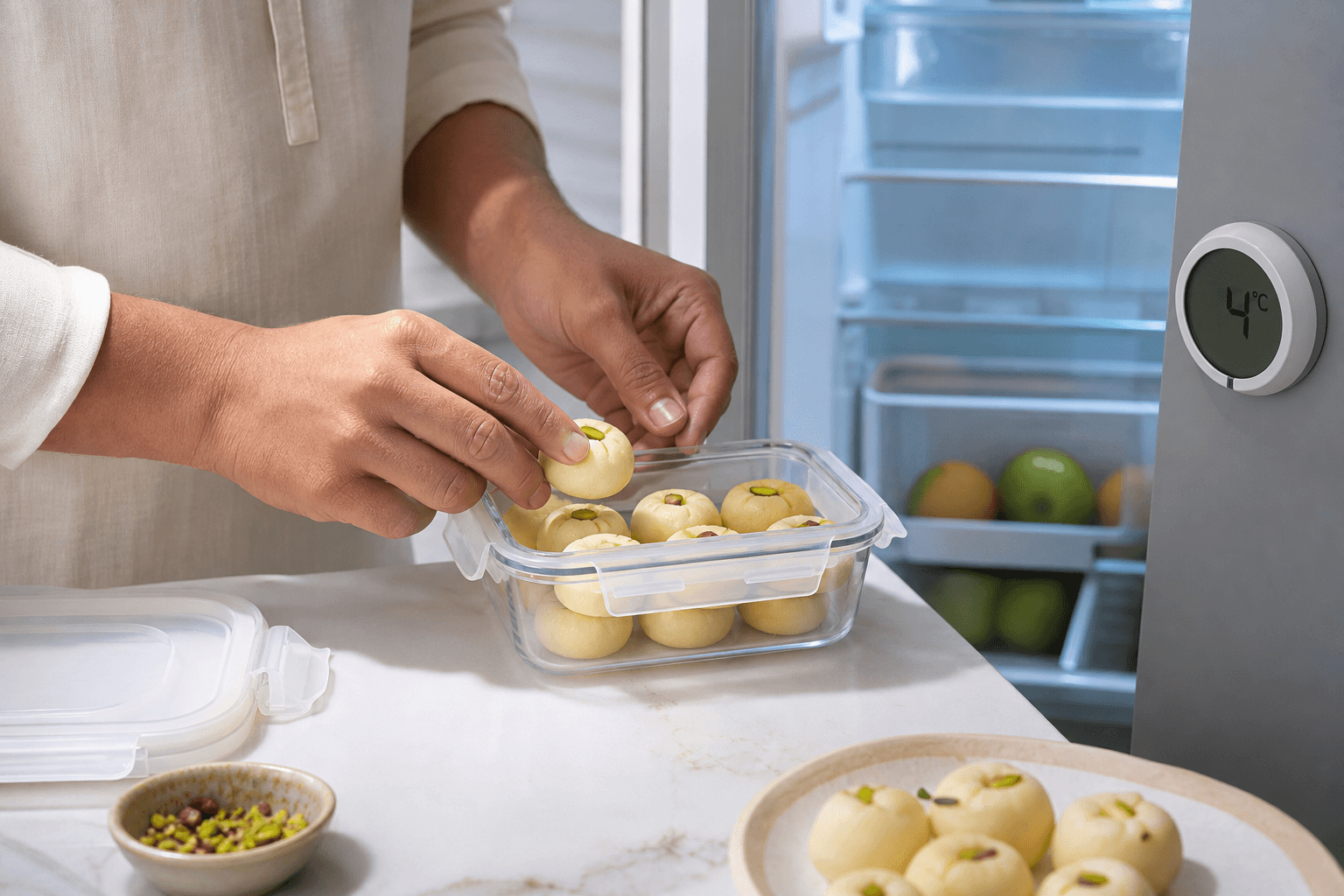
Place peda in the refrigerator as soon as practical after buying or preparing it. Keep the refrigerator at 4°C (40°F) or colder, which is the temperature recommended by Canada.ca for refrigerated food. A refrigerator thermometer is useful because the dial setting alone does not confirm the actual temperature.
Store the container on an interior shelf rather than in the door when possible. The door experiences more temperature changes, while an interior shelf generally provides more consistent chilling. Avoid packing the container against hot food, and do not leave the full batch on the counter while serving one piece at a time.
3. Use an airtight container to protect texture
Transfer peda to a clean, food-safe container with a tight-fitting lid. Airtight packaging limits exposure to dry refrigerator air, which can make the surface firmer or duller over time, and it helps prevent the sweet from absorbing nearby odors.
Arrange pieces in a single layer when possible. If you need multiple layers, separate them with parchment or another food-safe barrier so they do not stick together. Choose a container that fits the quantity reasonably well. Excess empty space allows more air to circulate, while an overcrowded container can crush delicate pieces.
4. Protect peda from odors and moisture
Milk-based sweets can pick up aromas from foods such as onions, garlic, strong sauces, and heavily spiced leftovers. Keep peda sealed and place it away from foods with pronounced smells. Do not rely on a loose foil cover or an open serving tray for refrigerator storage.
Moisture matters too. Condensation can soften the surface and create an uneven texture, particularly when a cold container is repeatedly opened in a warm room. Keep the lid closed except when serving, and use a dry serving utensil. If you notice condensation inside the container, avoid repeatedly moving the entire batch between warm and cold conditions.
5. Portion and label before storing
Divide peda into practical serving portions before refrigerating or freezing it. A small container for each planned serving reduces how often the main batch is opened, warmed, and exposed to air. It also makes it easier to prepare a gift box, family dessert plate, or small snack without disturbing the remaining pieces.
Write the storage date on each container or package. Use the oldest portion first and keep purchased or prepared batches separate rather than combining them without labels. A date label cannot make food safe beyond its handling limits, but it helps you remember how long the sweet has been stored and avoid guesswork.
6. Freeze peda only when longer storage is necessary
Freezing can be useful when you will not serve the peda soon, but it is a quality compromise rather than a guarantee of the original texture. Ice formation and thawing may make the sweet softer, drier, grainier, or more prone to surface changes, depending on its recipe and moisture content.
Wrap individual pieces or small portions in food-safe wrapping, then place them in a well-sealed freezer container or bag. Remove as much excess air as practical and label the package with the date. Keep the freezer at -18°C (0°F) or colder, consistent with the temperature guidance from Canada.ca’s food storage recommendations. If the seller gives different product-specific instructions, follow those instructions.
Freeze only the amount you are willing to thaw and use. Repeated freezing and thawing increases texture damage and makes temperature control more difficult.
7. Thaw in the refrigerator and know when to discard it
Move frozen peda from the freezer to the refrigerator and let it thaw while chilled. Keep it sealed during thawing so condensation does not collect directly on the sweet. Avoid thawing it on the counter, especially if the room is warm or the package is large.
After thawing, use a clean utensil and return unused pieces to the refrigerator promptly. Do not repeatedly warm the entire container for serving. If the peda has been left at room temperature beyond the safe limit, has been exposed to questionable handling, or you are unsure how long it was warm, discard it.
Texture changes, dryness, or freezer damage are quality problems. However, smell, appearance, and taste cannot reliably prove that food is safe. Never taste questionable food to test it. When the handling history is unsafe or uncertain, throwing it away is the safer decision.
Buying fresh peda and planning storage
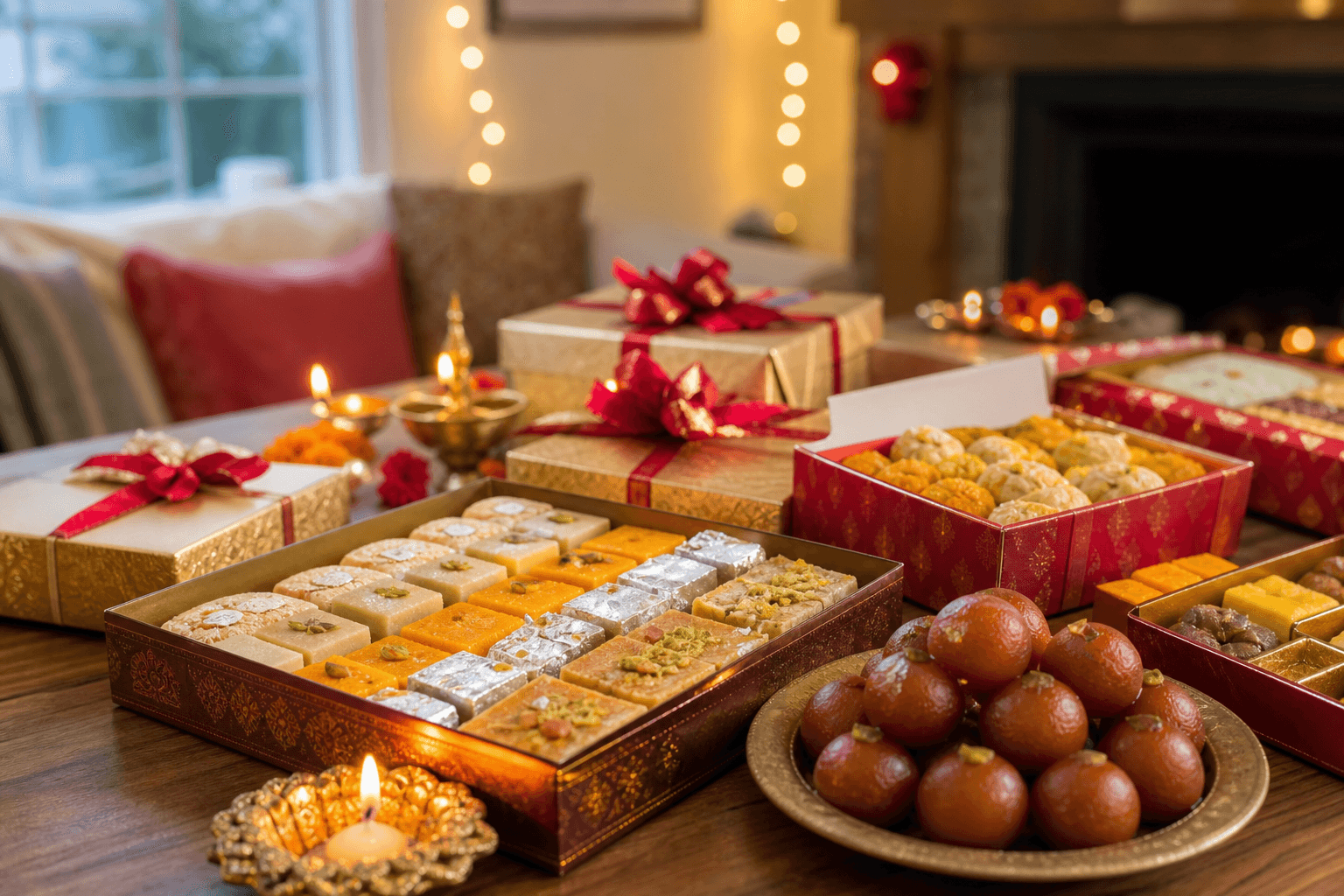
If you are buying peda for a celebration, choose an amount that can be served and refrigerated without prolonged counter time. Ask the seller for product-specific storage and use instructions, especially if the sweet is packaged for gifting or has a filling, topping, or preparation method that may affect its handling.
For fresh Punjabi sweets in Abbotsford, Super Punjab Sweet House describes its selection as 100% vegetarian and prepared fresh daily. That freshness is useful when planning a purchase, but it does not replace safe storage after the sweets reach your home. Refrigerate promptly, keep the package sealed, and follow any instructions provided with the specific product.
Frequently asked questions
Does peda need to be refrigerated?
As a general precaution, yes. Treat peda as a perishable milk-based sweet and refrigerate it promptly rather than leaving it on the counter for extended periods. Follow the seller’s instructions if they provide product-specific guidance.
Can you freeze peda?
Yes, freezing may be practical when you need longer storage, but it can change the sweet’s texture after thawing. Freeze small, airtight portions and thaw them in the refrigerator.
What is the safest way to thaw frozen peda?
Thaw it in a sealed container in the refrigerator. This keeps the sweet chilled while it defrosts and helps limit condensation. Do not thaw it on the counter.
Can you tell if peda is safe by smelling it?
No. An unusual smell or appearance can be a reason to discard it, but a normal smell does not prove that it is safe. If peda was left out too long or its handling history is uncertain, do not taste it to check.
Should homemade and store-bought peda be stored differently?
The same basic precautions apply to both: prompt refrigeration, airtight packaging, careful portioning, and safe thawing. Homemade and shop-bought peda may differ in ingredients and moisture, so use the maker’s or seller’s storage instructions when available.
Make refrigeration your default peda storage choice
The simplest decision is to refrigerate peda promptly, keep it sealed at 4°C or colder, and portion it before storing. Use the freezer only when necessary, accept that thawing may affect texture, and thaw portions in the refrigerator rather than at room temperature.
Most importantly, separate freshness judgments from safety decisions. Dryness or a changed texture may mean reduced quality, but food that has exceeded safe temperature limits should be discarded even if it looks and smells normal.
To explore fresh, 100% vegetarian Punjabi sweets in Abbotsford, visit Super Punjab Sweet House and check the available ordering and pickup information before you buy.