Indian Sweets in Abbotsford Explained for Every Occasion
Last updated: October 2026
An everyday family box, a host gift and sweets for a large celebration solve different practical problems. One may need a small selection for immediate eating; another needs secure presentation and travel stability; a large order needs a headcount, serving plan, pickup window and clear dietary communication.
This explainer focuses on how to plan an Indian sweet order from purpose to pickup. It does not invent ingredients, prices, shelf life, allergen-free claims or current availability.

What the current Abbotsford menu confirms
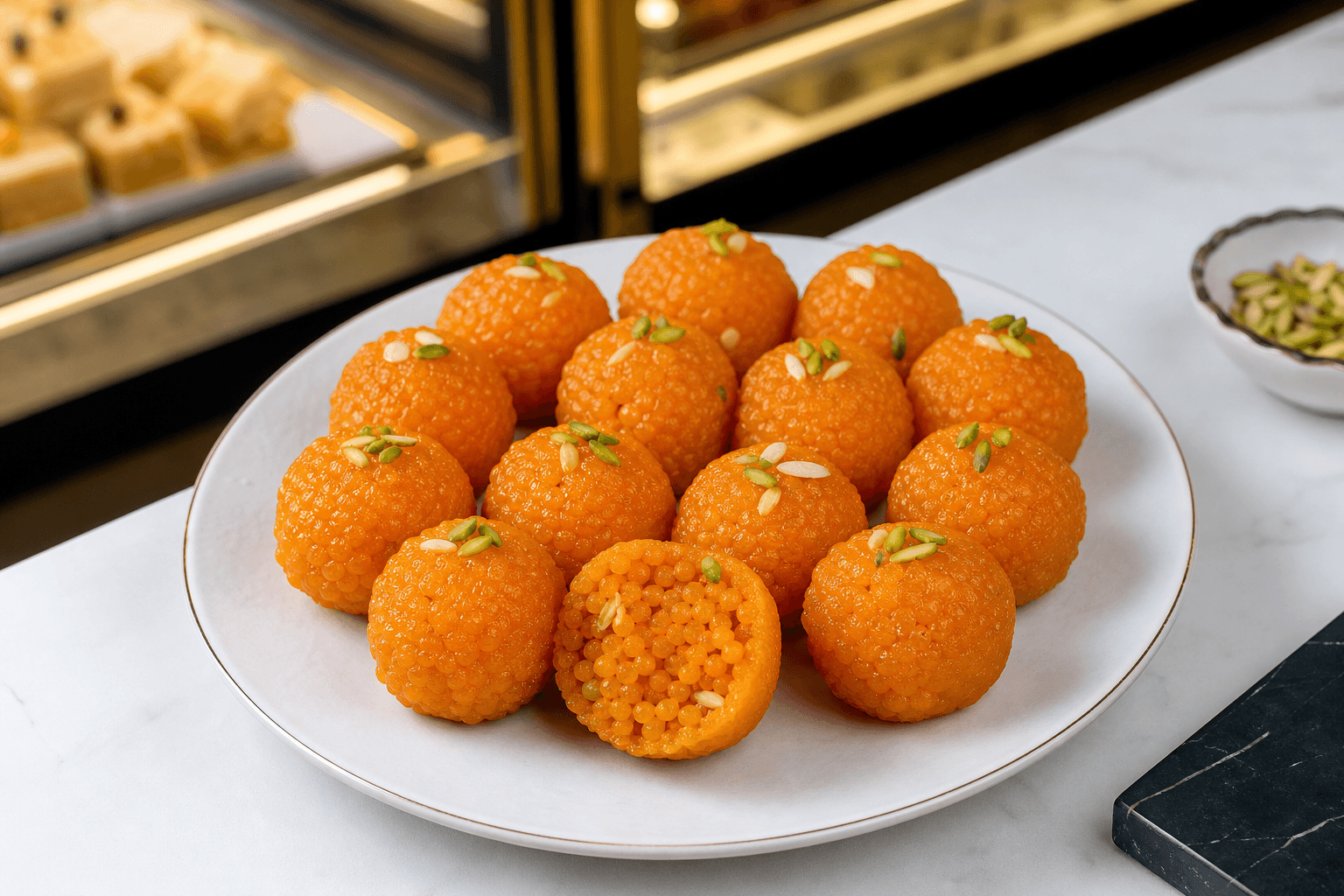
Super Punjab Sweet House’s current Indian sweets menu groups products as wet sweets, dry sweets and other sweets. The listed examples include gulab jamun, rasgulla, chum chum, malai chop, gujrela and petha in the wet group; several barfi and pinni varieties in the dry group; and ladoo, moti choor ladoo and jalebi among the other items.
Use these categories as menu navigation rather than technical definitions. “Wet” and “dry” do not establish whether a product requires refrigeration, how long it can travel, whether syrup may leak or how long quality will hold. Product names also do not guarantee that every shop uses the same recipe.
The business describes itself as offering Punjabi sweets and savouries, fresh daily batches and a 100% vegetarian selection. Those first-party statements do not guarantee that every item is available on a particular day or suitable for a specific diet. Vegetarian does not mean vegan, dairy-free, nut-free, gluten-free or safe for someone with an allergy.
Choose the order format by occasion
Everyday home order
Choose a manageable selection and ask how each item should be stored after pickup. If household preferences differ, a smaller mixed order can help you identify favourites before placing a larger order.
Host or thank-you gift
Tell the shop how long the sweets will travel and when the recipient is likely to open them. Ask about packaging, item separation and the category staff recommend for the expected conditions. Confirm whether a message or special presentation option is currently available instead of assuming it is offered.
Celebration table
Provide the event date, guest count, meal format, other desserts, serving time and whether guests will take pieces home. Ask for guidance based on the exact products and whether the shop counts by piece or weight; there is no universal formula when sizes and serving styles differ.
Religious, cultural or community occasion
Name the occasion and explain any ingredient, preparation or handling expectations that matter. A menu category cannot confirm that a product meets a family’s or institution’s specific requirements, so discuss those requirements before payment.
Workplace or school sharing
Check the venue’s outside-food and allergen rules first. Individual labels or ingredient information may be necessary, and a shared tray may be unsuitable where cross-contact cannot be managed confidently.
Build variety around contrast and practical serving
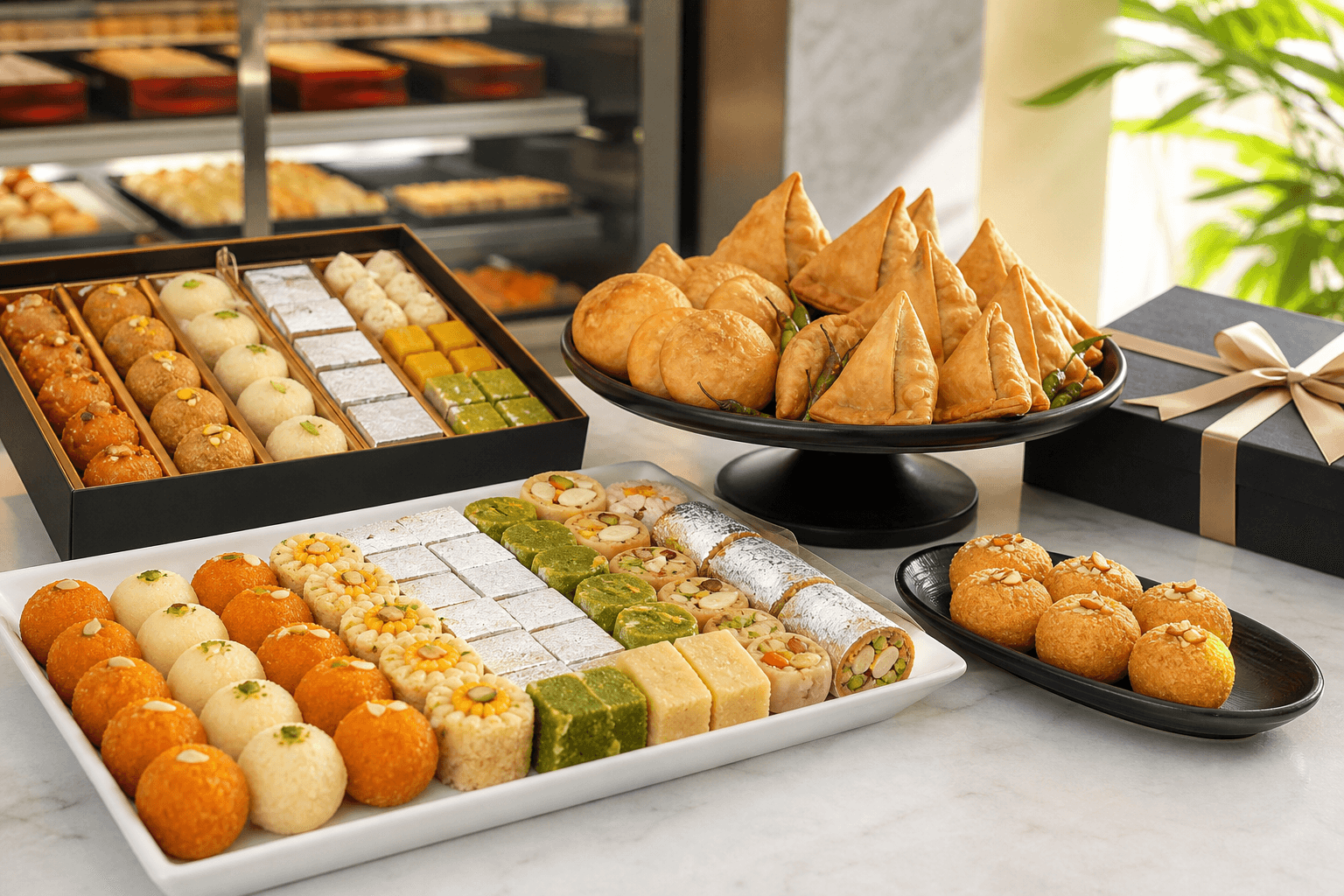
A varied box can combine menu groups, but variety should serve the occasion. Ask what is currently made, which pieces are sold individually or by weight, and whether mixed packaging is available. A long list of names is not useful if the selection cannot travel, be served neatly or remain suitable until the event.
| Decision | Question to ask | Why it matters |
|---|---|---|
| Current availability | Which wet, dry and other sweets are available for the pickup date? | The online list may not reflect today’s batch. |
| Texture and service | Which choices are easiest to portion or serve in this setting? | Home, gift and buffet service have different needs. |
| Selection contrast | How would staff describe the current options beyond their names? | Guests may prefer different textures and levels of richness. |
| Packaging | Should syrupy and dry pieces be separated? | Separation can protect presentation and handling. |
| Dietary questions | Can staff verify ingredients and cross-contact for this batch? | Menu categories do not answer allergy questions. |
Rather than asking for one “best” sweet for everyone, give staff useful constraints: familiar or adventurous, immediate serving or travel, individual pieces or a plated dessert, and any dietary limits. Current production knowledge can then inform the selection.

Plan quantity from guests and serving style
Begin with the number of people expected to eat, not simply the number invited. Note whether sweets are the only dessert, one option on a larger table or a take-home favour. Tell the shop whether children are included, whether pieces will be cut and what other food will be served.
Ask for current piece or weight guidance for the exact selection. A mixed order complicates counting because pieces may differ in size and density. Decide whether everyone needs access to every variety or whether the goal is a general assortment.
If one item is essential for a ritual, gift or special table, count it separately rather than assuming it will remain in a mixed box. Also ask when final quantities and varieties must be confirmed, whether a deposit applies and how changes or cancellations are handled. This article does not state the shop’s current ordering policies.
Coordinate pickup, travel and storage
The business describes new batches as being prepared daily, but “fresh daily” does not establish the production time or storage life of a particular sweet. Ask when the selected products are expected to be prepared, how they should be transported and whether they require refrigeration. Follow the instructions supplied with the order.
Plan pickup around the event, traffic and the time sweets will spend outside controlled conditions. Keep the package level and protected from heat, direct sun, strong odours and contamination. Do not leave food unattended in a vehicle. If a venue will hold the box, pass the shop’s storage and serving instructions to the responsible person.
Before travelling, use the shop’s contact details for pickup confirmation to verify order readiness, the current address, opening time and handoff procedure. Confirm these details directly because online business information can change.
Treat allergen questions as product and batch specific
Health Canada’s priority-allergen guidance identifies eggs, milk, mustard, peanuts, sesame, soy, sulphites, tree nuts, wheat and triticale, along with seafood categories, among priority substances. Indian sweets may use or encounter some of these, but this article does not infer which are present in any Super Punjab product.
Ask about the exact recipe, ingredient labels for packaged inputs, shared utensils, fryers, trays, counters, storage and production sequence for the current batch. If staff cannot confidently verify a medically necessary restriction or cross-contact risk, do not treat its absence from a menu description as proof of safety.
For prepackaged items, the Canadian Food Inspection Agency’s food-label allergy guidance recommends checking the ingredient list and “contains” or “may contain” statements every time. Counter-service communication may differ from packaged labelling, so people with allergies should follow their healthcare plan and avoid uncertain food.
Use a complete order checklist
- State the occasion, date, serving time and expected guest count.
- Ask which items and batch sizes are currently available.
- Describe travel time, holding conditions and serving method.
- Request piece or weight guidance for the exact mix.
- Explain dietary needs and cross-contact limitations before payment.
- Agree on packaging, labelling and any separation required.
- Confirm price, tax, deposit, change and cancellation terms.
- Record the pickup date, time, address, contact and order name.
- Ask for storage, transport and serving instructions.
- Inspect the order at pickup before leaving.
For a large or high-stakes event, ask for the details in writing. A clear summary prevents a conversation about “a mixed box for Saturday” from becoming several different expectations.
Common ordering mistakes to avoid
- Assuming every named sweet has the same recipe at every shop.
- Treating vegetarian as vegan, dairy-free, nut-free or allergy-safe.
- Using wet or dry categories as storage instructions.
- Ordering by guest count without discussing serving style and piece size.
- Mixing items in one package without asking about travel and presentation.
- Relying on old prices, hours or availability from a cached page.
- Waiting until pickup to raise a serious allergen requirement.
- Leaving sweets in a warm vehicle or ignoring shop instructions.
Frequently asked questions
Which Indian sweets does Super Punjab Sweet House list?
The current menu groups items as wet, dry and other sweets, including examples such as gulab jamun, rasgulla, barfi, pinni, ladoo and jalebi varieties. Confirm the current batch before travelling because listed items and availability can change.
Are the sweets allergy-safe because they are vegetarian?
No. Vegetarian status does not answer questions about milk, nuts, wheat, soy, sesame or other allergens and cross-contact. Confirm the exact product and batch, and avoid uncertain food when a medically necessary restriction cannot be verified.
How many pieces should I order per guest?
There is no reliable universal number because piece sizes, other desserts and service styles differ. Give the shop the event details and ask for guidance based on the specific products and whether the order is counted by piece or weight.
Can I rely on online hours for pickup?
Confirm before leaving for the shop. Order readiness, hours, address details and pickup procedures can change, so direct confirmation should control for an important event.
Turn your event details into one confirmed Abbotsford order
Visit Super Punjab Sweet House to review the current business information, then confirm varieties, quantity guidance, price, batch availability, packaging, pickup and storage before ordering. Raise allergies or dietary restrictions early and do not proceed when ingredients or cross-contact cannot be verified.
General food-order planning information, not medical or food-safety advice. Menus, ingredients, allergens, cross-contact, prices, availability, hours and storage instructions can change. Confirm details with the shop and follow qualified healthcare guidance for allergies.